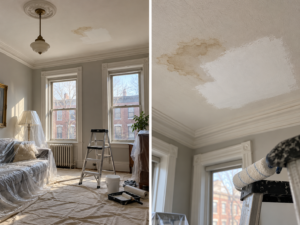

Primer, Coverage, and Finish Planning for Philadelphia Interiors
Color changes expose preparation problems that similar-color repaints can hide
Changing a charcoal, navy, deep green, or burgundy room to a warm white or light neutral can make a Philadelphia interior feel dramatically brighter. It can also reveal every patch, roller mark, uneven sheen, and surface defect that was less visible under the darker color.
A successful light-over-dark repaint is therefore not just a question of buying “high coverage” paint. The process should begin with surface condition, repair quality, primer selection, and a realistic coating plan based on the old color and the new finish.
Clean and repair before thinking about coverage
Paint adheres to the surface underneath it, not to the homeowner’s color goal. Oils around switches, kitchen residue, dust on baseboards, and glossy previous coatings can interfere with adhesion. Walls should be cleaned as appropriate and loose material removed before patching or sanding begins.
Dark paint often makes old repairs difficult to judge until the room is viewed under stronger work lights. Once the walls are prepared for a lighter color, poorly feathered patches and joint compound edges may become more obvious. Those areas should be corrected before primer so the new finish does not highlight them.
Primer can improve uniformity, but it is not magic
A quality primer can help create a more uniform base, especially when the color change is dramatic or the existing wall has patchwork, stains, porous repairs, or a sheen that needs better adhesion. The exact primer should match the substrate and the condition being addressed.
Tinting primer toward the finish color can sometimes help with strong color transitions, but the painter should follow the coating manufacturer’s recommendations. Primer does not replace finish coats, and an extra coat of paint may still be required to reach the intended color and opacity.
Light colors can make wall texture more noticeable
Homeowners sometimes expect a light color to hide wall imperfections. In reality, surface visibility depends on lighting direction, sheen, texture, and color. Strong side lighting from large Philadelphia row-home windows can reveal ridges, repairs, and waviness that were not obvious in a darker room.
If the walls have numerous patches or inconsistent texture, a skim coat or broader surface repair may be more effective than adding multiple coats of finish paint. The goal is to create a uniform substrate before the final color is applied.
Choose sheen based on the room and wall condition
Flat and matte finishes can reduce glare and help minimize the appearance of minor imperfections, while eggshell, satin, and higher sheens reflect more light and can make surface defects easier to see. Higher-sheen products may provide better wash-ability in some applications, but the choice should balance durability with the condition of the wall.
Kitchens, bathrooms, hallways, bedrooms, and formal living rooms do not all need the same finish. Sampling the actual color and sheen on the prepared wall is more useful than choosing from a small chip under store lighting.
Plan the entire room, not just the wall color
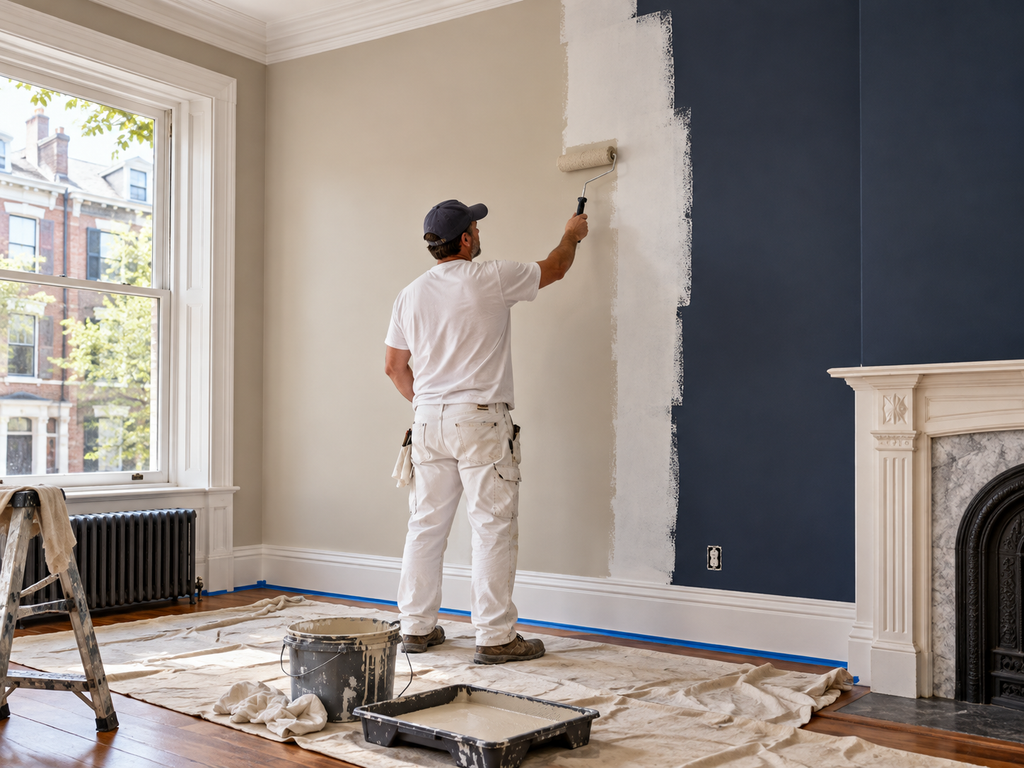
A major color change affects trim, ceilings, doors, radiators, built-ins, and the way natural light moves through the room. Dark wall colors often leave visible cut lines or accumulated paint ridges at trim edges. A professional repaint may need selective caulking, trim touch-up, or full trim repainting to make the transition look deliberate.
Philadelphia Painting Services can help homeowners plan interior color changes with the surface preparation, primer, and finish strategy needed for clean coverage. The best result is not simply a lighter wall—it is a room where the new color looks even under daylight, lamps, and normal daily use.
Frequently Asked Questions
Do I always need primer to paint dark walls light?
Not always, but primer is often useful for major color changes, repairs, stains, porosity differences, or adhesion concerns.
Will two coats of paint always cover a dark color?
Coverage varies by product, color, substrate, application method, and primer strategy. Some transitions need an additional coat.
Which sheen hides wall imperfections best?
Lower sheens generally reflect less light and can reduce the visibility of minor imperfections, but the room’s durability needs also matter.