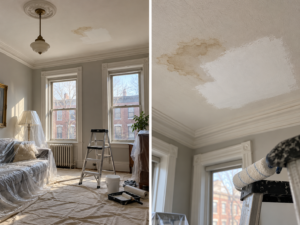

A brown or yellow ceiling stain is one of the most visible reminders of a past leak.
After the roof, plumbing, or upstairs fixture is repaired, homeowners naturally want the mark gone.
The temptation is to roll ordinary ceiling paint over it and move on.
Sometimes the stain disappears briefly and then slowly shows through again.
That happens because painting the surface and blocking the discoloration are two different tasks.
Fix the Water Source First
Paint should never be used to hide an active leak.
Before cosmetic repairs begin, the source of moisture needs to be identified and corrected.
That might involve roofing, plumbing, a bathroom fixture, HVAC condensation, or another building condition.
Philadelphia Painting Services’ interior painting services can address the finished surface after the underlying moisture problem has been resolved.
The Ceiling Needs Time to Dry
Even after the leak stops, the ceiling assembly may retain moisture.
Painting too soon can trap moisture, reduce adhesion, and complicate diagnosis if staining changes.
Drying time depends on the severity of the leak, ceiling material, insulation, ventilation, and surrounding conditions.
Suspected persistent moisture should be evaluated before priming.
Determine Whether the Ceiling Material Is Still Sound
A stain does not automatically mean drywall or plaster needs replacement.
If the material remains firm, flat, and well attached after drying, the repair may remain primarily cosmetic.
However, sagging drywall, crumbling plaster, soft material, loose paint, or significant deterioration may require repair before painting.
The finished coating will only perform as well as the surface beneath it.
Why Water Stains Bleed Through Paint
Water can carry dissolved compounds through drywall paper, plaster, wood, insulation, or other building materials.
As the area dries, discoloration remains at the surface.
Some stains can migrate through ordinary water-based paint, becoming visible again even after several coats.
A stain-blocking primer is designed to isolate that discoloration before the finish coat is applied.
Not Every Primer Is the Same
Primer selection depends on the stain and substrate.
Different stain-blocking products use water-based, oil-based, shellac-based, or other formulations.
Some products are more effective against severe water staining than general-purpose drywall primers.
Product instructions, ventilation requirements, drying time, and compatibility with the finish coat should be followed.
Repair Texture Before Priming
If the leak caused blistered paint, damaged joint compound, or a small plaster crack, surface repairs should occur before final painting.
Loose material needs to be removed.
Patches should be feathered smoothly so they disappear into the surrounding ceiling.
Strong natural or side lighting can reveal poorly blended repairs even when the color match is correct.
Spot Priming vs. Priming the Entire Ceiling
A small isolated stain may only require localized stain blocking.
Larger affected areas or ceilings with inconsistent porosity may benefit from a broader priming strategy.
The final painting decision also depends on the age and condition of the existing ceiling coating.
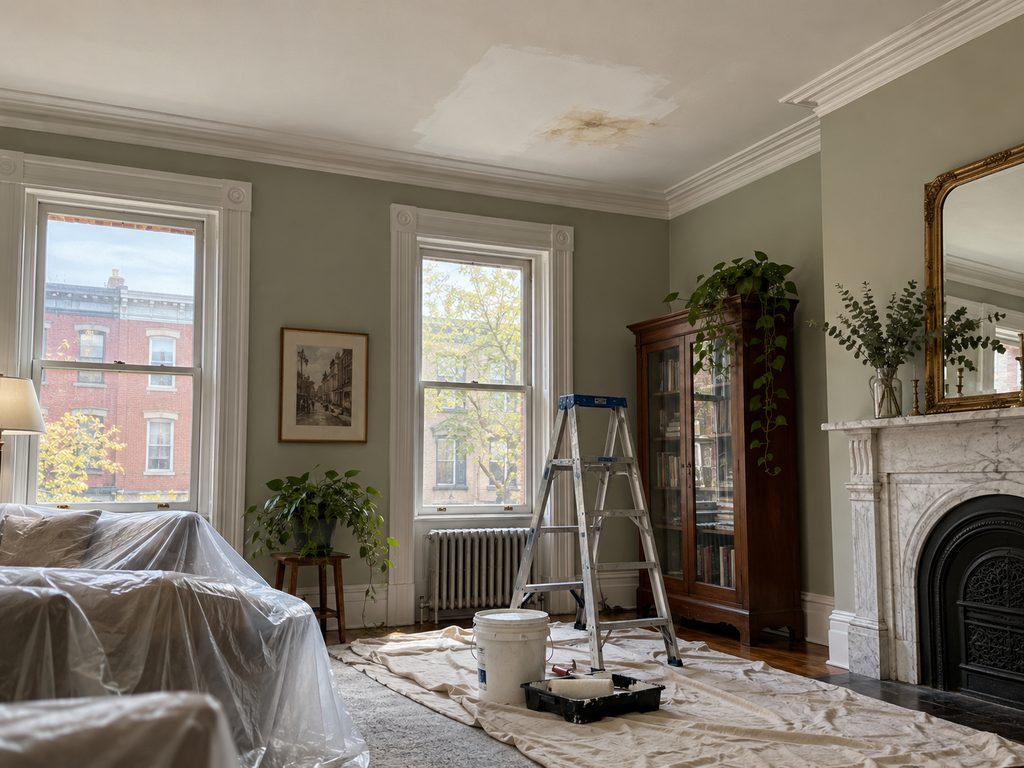
Matching Ceiling Paint Can Be Difficult
Even when the original paint color is known, touching up one section may remain visible.
Older paint changes slightly with age, dust, cooking residue, sunlight, and cleaning.
Flat finishes are often forgiving, but not always.
For a prominent ceiling, repainting the complete plane can produce a more uniform result than patching a small area.
Watch for Mold or Ongoing Moisture
A water stain and mold are not the same thing.
However, persistent dampness can support microbial growth.
If unusual spotting, odor, or recurring moisture is present, the condition should be evaluated rather than simply painted.
The EPA provides homeowner information through its mold and moisture resources.
Cosmetic Repair Comes Last
The correct sequence is:
- identify the source,
- stop the water,
- allow the assembly to dry,
- repair damaged material,
- block the stain,
- repaint.
Skipping the first steps may create a clean-looking ceiling for a short time while the real problem continues above it.
FAQ
Can I paint directly over a dry water stain?
The stain may bleed through ordinary paint. A suitable stain-blocking primer is often needed.
How do I know the leak is actually fixed?
The moisture source should be repaired and the affected area monitored or evaluated before cosmetic finishing.
Does stained drywall always need replacement?
No. Dry, structurally sound drywall may often be repaired and refinished.
Why can I still see the patch after painting?
Texture, sheen, porosity, and differences between old and new paint can make localized repairs visible.
Once the leak is truly resolved, Philadelphia Painting Services can repair, prime, and repaint stained ceilings so the finish does not advertise yesterday’s water problem.