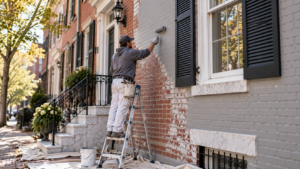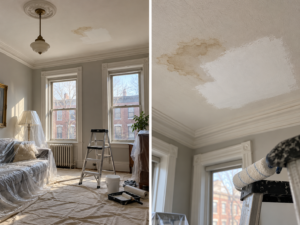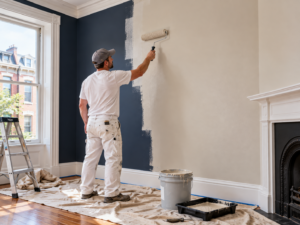

Philadelphia is a city of brick. From Queen Village trinities to Kensington row-homes, thousands of facades have been painted, repainted, and patched over the past century. Homeowners often want to refresh a worn painted facade or paint bare brick for a cleaner, modern look. But brick is not drywall. It absorbs and releases water constantly, and the wrong coating can turn a cosmetic upgrade into a moisture problem.
When paint traps water inside masonry, freeze-thaw cycles push the face of the brick off (spalling), mortar joints deteriorate faster, and paint peels in sheets within a few seasons.
1. Assess the Wall Before Choosing a Coating
- Moisture Sources: Check gutters, downspouts, window sills, and the top of the wall. Painting over an active leak only hides it.
- Efflorescence: White, powdery salt deposits show that water is moving through the brick. The source must be addressed and the salts cleaned before coating.
- Mortar Condition: Open, cracked, or soft mortar joints should be re-pointed with a compatible mortar before painting.
- Existing Coating: Determine whether the wall has old oil-based paint, latex, or elastomeric coatings, because compatibility affects adhesion.
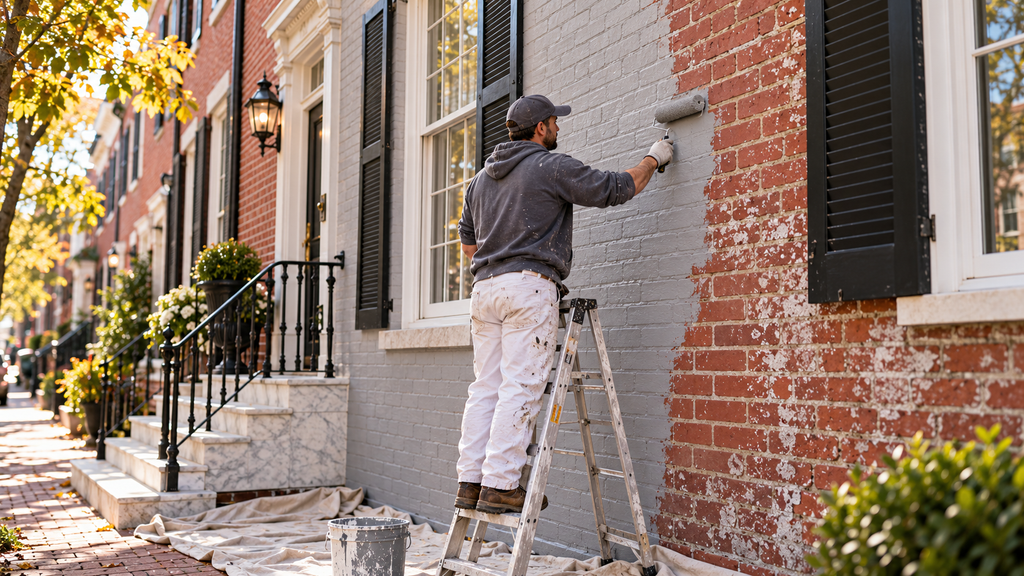
2. Choosing the Right Masonry Coating
Masonry Coating Selection Checklist:
- Breathable Mineral (Silicate) Paints: Bond chemically with mineral surfaces and allow water vapor to escape, a common choice for bare or previously unpainted brick where compatible.
- Masonry-Grade Acrylic Paints: Designed for exterior masonry with better vapor permeability than standard house paint, often used over existing painted brick.
- Elastomeric Coatings: Bridge hairline cracks but are less breathable, so they should be used carefully on solid masonry walls that need to dry outward.
- Avoid Standard Interior or Low-Grade Paints: These can seal the surface and lead to blistering and peeling.
3. Preparation Determines How Long the Paint Lasts
Proper preparation includes gentle cleaning (avoiding high-pressure blasting that damages brick faces), scraping loose paint, allowing the wall to dry fully, and priming with a masonry-compatible primer when the coating system calls for it. Painting is best done in dry weather with temperatures within the manufacturer’s range, which in Philadelphia usually means late spring through early fall.
4. Lead-Safe Practices on Older Homes
Most painted brick in Philadelphia predates 1978, so lead-based paint should be assumed until tested. Contractors disturbing painted surfaces in pre-1978 homes must follow the EPA Renovation, Repair and Painting (RRP) Program guidelines, including containment and cleanup procedures.
The right coating protects both the look and the life of your brick. Explore our painting services to get a brick facade assessment from Philadelphia Painting Services.