
Temperature Constraints for Fall Exterior Painting in Philly is a practical planning question for property owners in Philadelphia. The right approach depends on the existing conditions, the way the space or system is used, and how the proposed work interacts with surrounding materials. Understanding those details early helps prevent a cosmetic decision from creating a larger construction, maintenance, or code problem later. That review should happen before demolition, fabrication, or installation begins.
Air Temperature Is Only One Variable
Exterior paint performance depends on surface temperature, air temperature, humidity, dew point, wind, sunlight, and the product’s curing requirements. A mild afternoon does not guarantee that siding or masonry is warm and dry enough, particularly on shaded elevations. Conditions must remain suitable during application and the early cure period.
Watch the Overnight Forecast
Fall temperatures can drop quickly after sunset. Paint applied late in the day may be exposed to condensation or temperatures below its stated range before it forms a durable film. Start and stop times should reflect the coldest part of the cure window, not just the temperature at the moment the can is opened.
Different Products Have Different Limits
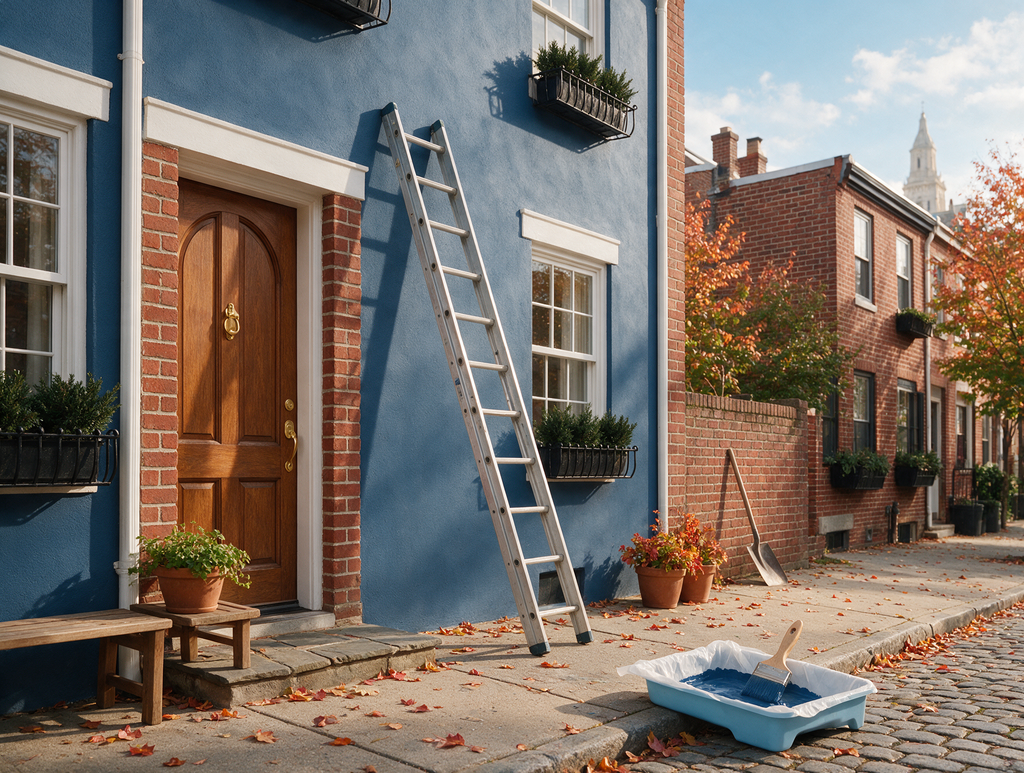
Some modern exterior coatings are formulated for cooler weather, while others require warmer and drier conditions. Primer, patching compounds, sealants, and finish coats may each have different minimums. The contractor should follow the technical data for the exact product and substrate instead of relying on a general seasonal rule.
Schedule Elevations Strategically
Sun exposure and wind can make one side of a building ready before another. Crews may shift preparation and painting by elevation to stay within suitable conditions. The schedule should also protect fresh work from rain, falling leaves, dust, and early frost without rushing surface preparation.
Questions to Resolve Before Work Begins
Before work begins, document the existing condition and confirm which decisions require a licensed trade, design professional, permit, inspection, or manufacturer review. Ask how the proposed work connects to adjacent materials and building systems, which areas need temporary protection, and what access must remain after completion. A clear written scope should also explain how concealed conditions, substitutions, schedule changes, cleanup, and final testing will be handled. Keep product instructions, approved drawings, inspection records, photographs, and final selections together with the property documents. These records help future owners and service professionals understand what is behind finished surfaces and which maintenance practices are appropriate for the completed work.
Planning the Next Step
Property owners should compare the visible condition with the broader assembly, confirm any permit or manufacturer requirements that apply, and document the proposed scope before materials are ordered. Guidance from American Coatings Association can help frame the technical questions, while an on-site evaluation determines what is appropriate for the individual property. Contact Philadelphia Painting Services to discuss surface preparation, coating selection, scheduling, and finish expectations for your residential or commercial painting project.
Learn more about exterior painting.
Authoritative external source: American Coatings Association