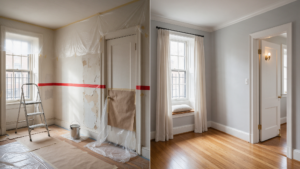

Applying a fresh coat of premium paint over a damaged wall is a waste of both time and money. For homeowners in historic neighborhoods like Fairmount and Center City, the structural surfaces beneath the paint often hold a century of wear and tear. Settling foundations, historical roof leaks, and decades of picture-hanging leave walls scarred with cracks, dents, and flaking plaster. Achieving a flawless, modern finish requires rigorous preparation and expert drywall restoration before a single drop of paint touches the surface.
The Reality of Aging Rowhome Walls
Historic Philadelphia properties rarely feature perfectly plumb, pristine drywall. Most homes constructed before the 1950s utilized lath and plaster, a highly durable but rigid material that reacts poorly to the natural shifting of a rowhouse.
Addressing Plaster and Drywall Cracks
Stress cracks commonly form above door frames, near window corners, and along the seams where walls meet ceilings. These occur as the heavy brick structure of the house settles unevenly. Simply filling these active cracks with spackle is a temporary illusion; the crack will reappear within months. Permanent restoration involves carving out the crack to widen it slightly, applying fiberglass mesh joint tape to bridge the gap, and then feathering multiple layers of joint compound over the tape to create a seamless, flexible repair.
Repairing Water-Damaged Surfaces
Historical plumbing failures or old roof leaks often leave behind bubbling paint, brown water stains, and crumbling wallboard. Even if the active leak was fixed years ago, the compromised drywall remains fragile. Paint will not adhere properly to degraded gypsum. The damaged section must be entirely cut out to expose the wall studs. A new piece of drywall is installed, taped, and mudded flush with the surrounding wall. According to the Environmental Protection Agency (EPA), completely removing water-damaged porous materials like drywall is essential to preventing hidden mold growth inside the wall cavity.
The Art of Skim Coating
For walls that have been heavily textured, repeatedly patched, or stripped of old wallpaper, achieving a smooth, modern aesthetic requires a technique known as skim coating.
Restoring Flawless Surfaces
Skim coating involves applying a very thin layer of diluted joint compound over the entire surface of the wall using a wide trowel or specialized squeegee. Once dried, the compound is carefully sanded down using fine-grit sandpaper and dust-extraction vacuums. This process fills in microscopic divots, buries old paint lines, and creates a uniform, glass-like texture that makes high-end, low-luster paints look spectacular. It is a highly specialized skill that separates standard paint jobs from luxury restorations.
Proper Priming Post-Repair
Once the drywall compound is sanded smooth, it remains highly porous. If you apply finish paint directly over fresh joint compound, the patch will absorb the paint differently than the surrounding wall, causing “flashing”—a noticeable difference in sheen. A high-quality sealing primer must be applied over all repaired areas to lock down the surface and create a uniform canvas for the topcoat.
Creating the Perfect Canvas
The secret to a beautiful, long-lasting interior paint job lies entirely in the preparation. Skipping wall repairs guarantees a sloppy, amateurish result. If you are preparing to update your home’s interior, trust our team to provide professional drywall repair in Philadelphia prior to painting. Contact Philadelphia Painting Services to evaluate the condition of your walls and secure a flawless finish for your historic property.
FAQs:
- Why do the cracks in my plaster walls keep coming back? If cracks are filled with rigid spackle without using fiberglass mesh tape, the natural expansion and contraction of the house will cause the rigid filler to crack immediately along the same fault line.
- Can you paint directly over water stains? No. Even if the drywall is physically solid, the tannins in the water stain will bleed straight through standard latex paint. A specialized stain-blocking primer must be applied first.
- Is it necessary to remove old drywall if it has minor dents? Minor dents and nail holes can easily be filled and sanded smooth without replacing the board. Only structurally compromised or heavily water-damaged drywall needs to be physically cut out and replaced.