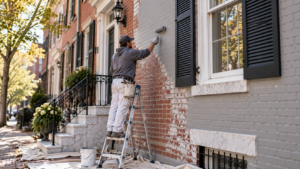

Much of Philadelphia’s housing was built long before 1978, the year the federal government banned lead-based paint for residential use. In row-homes and twins in Kensington, Port Richmond, West Philadelphia and nearly every older neighborhood, layers of lead paint may still be on window sills, trim, doors and stair railings, under newer coats.
Lead paint in good condition is not an emergency. The risk comes when it is disturbed. Sanding, scraping and cutting old paint create dust and chips that can spread through a home. That is why painting prep in older homes is regulated, and why homeowners should know what lead-safe work looks like before hiring a painter.
What the RRP Rule Covers
The U.S. Environmental Protection Agency’s Renovation, Repair and Painting (RRP) Rule applies to paid work that disturbs painted surfaces in older homes. According to the EPA:
the RRP Rule applies to paid work that disturbs painted surfaces in homes, childcare facilities and preschools built before 1978.
anyone paid to perform work that disturbs paint in housing built before 1978 must be certified in lead-safe work practices. That includes all firms, even sole proprietorship.
employees must be trained either as a certified renovator or on the job by a certified renovator.
For homeowners, the EPA notes that the rule generally does not apply to homeowners doing projects in their own pre-1978 homes. It does apply if the homeowner rents out all or part of the home, operates a childcare center there, or buys, renovates and sells homes for profit. Renters should know that their landlord or property manager must comply with the rule when performing work that disturbs paint.
Why Painting Prep Is the Risky Part
Painting itself, applying new paint over intact surfaces, creates little dust. Preparation is different. Many of the steps that make a paint job last are the same steps that disturb old paint:
scraping loose and peeling paint.
sanding to smooth edges and feather patches.
removing or replacing trim, doors or window parts.
cutting into plaster or drywall for repairs.
opening and closing old windows repeatedly, which grinds paint at friction surfaces.
The EPA points out that old or worn lead paint on high-friction surfaces such as doors and window sills can produce hazardous chips and dust. Windows, door jambs and stair treads are where older homes most often have problems.
What Lead-Safe Work Practices Look Like
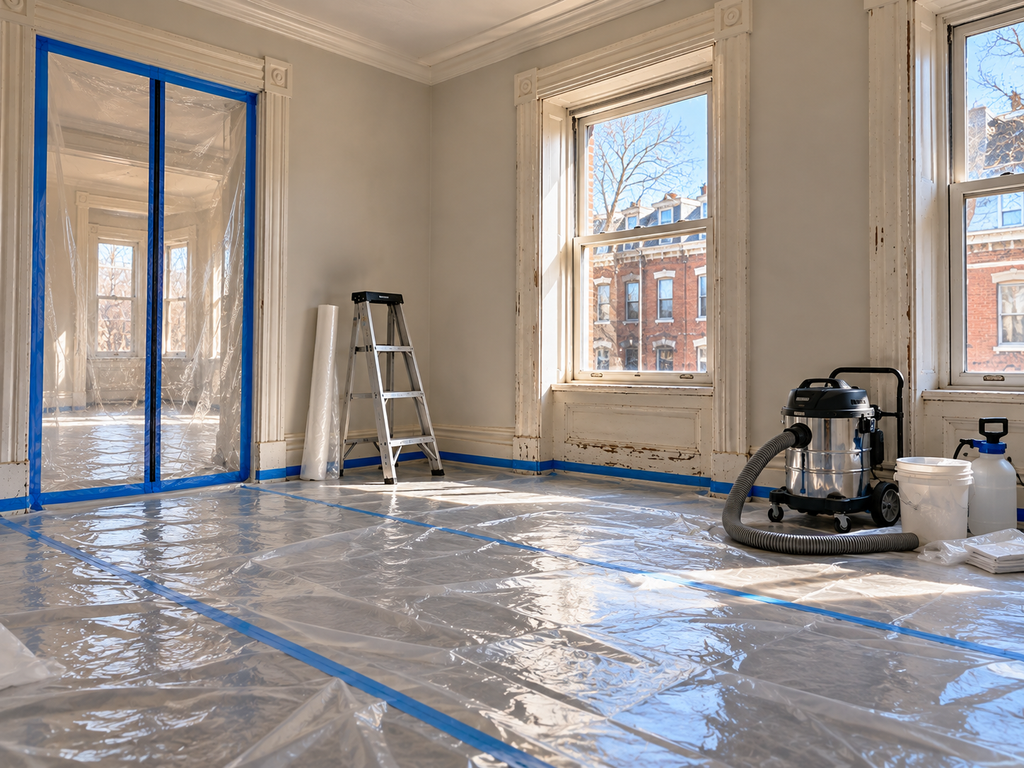
You do not need to be an expert to recognize a lead-safe setup. On an interior painting job in a pre-1978 home, expect to see:
Containment
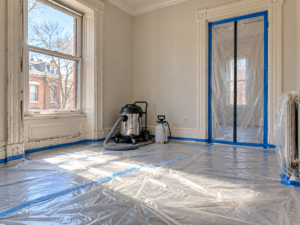
plastic sheeting on the floor of the work area, extending beyond the surfaces being worked on.
doorways closed off or covered so dust does not travel to other rooms.
furniture removed or covered and sealed.
•HVAC vents in the work area closed and covered.
Dust-minimizing methods
•Wet scraping and wet sanding instead of dry methods where possible.
•No open-flame burning of paint and no high-temperature heat guns.
power sanding only with equipment that captures dust with a HEPA attachment.
Cleanup and verification
•HEPA vacuuming of surfaces and floors, followed by wet cleaning.
•Careful folding and bagging of plastic sheeting so dust is not released.
•A cleaning verification step at the end of the job before the area is reopened.
Information before work starts
Certified firms are required to provide occupants of pre-1978 housing with the EPA’s lead hazard information pamphlet before renovation work begins. If a painter has never mentioned lead or the pamphlet for a project in an older home, ask why.
Questions to Ask a Painter Before You Hire
1. Is your firm EPA Lead-Safe Certified? Ask to see the firm’s certificate.
2. Who on the crew is a certified renovator? A certified renovator must be assigned to the job.
3. How will you contain dust in occupied rooms? Expect a specific answer, not “we’re careful.”
4. What methods will you use to remove peeling paint?
5. How will you clean up, and how do you verify the area is clean?
6. What will you do if you find more deteriorated paint than expected?
Living in the Home During the Project
Many interior painting projects happen while the family lives in the house. That is workable with planning:
•Schedule work room by room so you always have clean, usable living space.
•Keep children and pregnant family members out of work areas until cleanup is complete.
•Do not move belongings in and out of contained areas during the work.
•Ask the painter for a daily cleanup routine, not just a final one.
When Painting Is Not Enough
Sometimes the surface is too far gone for paint prep alone:
•Windows with badly deteriorated paint may need repair or replacement of components.
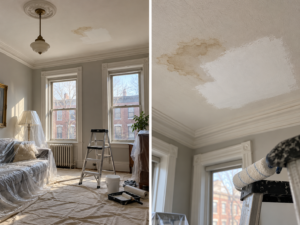
•Plaster that is loose or crumbling should be repaired before painting, with dust control.
•Peeling caused by moisture will keep peeling until the moisture source is fixed.
Painting over deteriorating lead paint without addressing the underlying problem can hide the issue temporarily, but it usually returns.
Testing for Lead
If you want to know whether a specific surface contains lead, testing can tell you. Certified inspectors and risk assessors can test surfaces, and the EPA recognizes certain test kits for use by certified renovators. A painter can treat surfaces as lead-containing without testing, which is a common and conservative approach in pre-1978 homes.
Frequently Asked Questions
Does every painting job in an old home require lead-safe practices?
The RRP Rule applies to paid work that disturbs painted surfaces in homes built before 1978. Repainting intact surfaces with little prep disturbs very little paint, but most real-world jobs involve some scraping, sanding or patching.
Can I stay home while my older house is being painted?
Often yes, with good containment and room-by-room scheduling. Keep children and pregnant family members away from work areas until cleanup is complete.
Is it safe to sand old paint myself?
The EPA advises homeowners doing their own work in pre-1978 homes to use lead-safe work practices, and recommends hiring a certified contractor. Dry sanding and open-flame removal create the most hazardous dust.
My landlord is painting my apartment. Do they have to follow the rule?
According to the EPA, landlords and property managers must comply with the RRP Rule when performing work that disturbs paint in pre-1978 housing.
A Good Paint Job Starts With Safe Prep
In an older Philadelphia home, the quality of a painting project depends on preparation, and preparation means disturbing old paint. Hiring a painter who uses lead-safe methods protects your family and gives you a finish that lasts.
Philadelphia Painting Services LLC paints interiors in older Philadelphia homes with careful surface preparation and dust control. Learn about our interior painting services and ask about lead-safe practices for your project.