
Painted kitchen cabinets usually fail in the same few ways: a door sticks to the face frame and peels, a thumbnail leaves a mark near the pull, or the finish chips at the edge of the sink base within months. In most cases the paint was not the problem. The prep was rushed, the product was not suited to cabinets, or the doors went back into service long before the coating had cured.
This article explains the difference between dry and cured, how the common cabinet enamels compare, what prep actually controls adhesion, and how Philadelphia’s seasons affect the timeline. It is written for owners of rowhomes, twins and single-family houses across the city who want a cabinet finish that holds up to daily use.
Dry vs Cured: Two Different Clocks
Paint labels list two or three times, and they mean different things:
- Dry to touch means the surface no longer feels wet. The film underneath is still soft.
- Recoat time is when the next coat can go on without disturbing the one below.
- Cure is when the film reaches its working hardness and adhesion. This takes far longer and is what determines when doors can be rehung, drawers loaded and surfaces cleaned with normal force.
For example, the technical data sheet for Sherwin-Williams Emerald Urethane Trim Enamel lists two hours to touch and four hours to recoat at 77°F and 50% relative humidity, with the note that times depend on temperature, humidity and film thickness. Those numbers tell you when you can apply the next coat. They do not tell you when the cabinets are ready for a busy kitchen.
How the Common Cabinet Paints Compare
Waterborne alkyd enamels
Waterborne alkyds combine water cleanup with the leveling and hardness associated with oil paints. Benjamin Moore explains that conventional alkyds dry by solvent evaporation and cure by oxidation in about five days, and states that its waterborne alkyd line fully cures in approximately five days, compared with about three to four weeks for latex acrylic coatings.
Treat that as a best-case figure. Benjamin Moore’s own cabinet guide tells users to give the final coat several days to cure before reassembling cabinets and returning them to service, and cooler or more humid conditions stretch every stage. Check the product data sheet for the specific sheen and product you are using.
Urethane-modified alkyd enamels
Some waterbased enamels use a urethane-modified alkyd resin. The Emerald Urethane Trim Enamel data sheet identifies its vehicle as urethane modified alkyd. The same sheet does not state a cure time, so plan conservatively and follow the manufacturer’s current guidance for cabinets.
Acrylic and other waterborne enamels
Premium acrylic enamels can perform well on cabinets, but they tend to stay softer longer and are more prone to “blocking,” where two painted surfaces stick together under pressure. That is exactly what happens where a door closes against a face frame. Choosing a product marketed as block-resistant and giving it extra time before closing doors helps.
Solvent-based oil enamels
Traditional oil enamels level and harden well but bring strong odors, longer recoat times and solvent cleanup. They also tend to yellow over time, especially on whites in darker areas. Many homeowners now choose waterborne alkyds for that reason.
Prep That Controls Adhesion
No enamel can bond well to a greasy, glossy or contaminated surface. Kitchen cabinets near ranges and handles carry cooking grease and hand oils that are not always visible.
1. Degrease before you sand
The Benjamin Moore ADVANCE cabinet refinishing guide is clear on the order of operations: clean every surface free of grease, oil, soap and wax first, because sanding a dirty surface can drive grime deeper into the wood and jeopardize primer adhesion. Pay attention to the areas above the range, around pulls and on the lower edges of doors.
2. Degloss and sand
Once clean, the existing finish needs to be dulled. The same guide calls for sanding with 150- to 220-grit paper until the existing finish is rough, with lighter hand sanding on profiles and edges. Sherwin-Williams’ data sheet puts it simply: glossy surfaces should be sanded dull. Remove all dust afterward, then wipe down again.
3. Prime for the substrate
Primer choice depends on what the cabinets are made of and how they were finished:
- Bare or previously painted wood: a sanding primer compatible with the topcoat.
- Stained or tannin-rich wood such as oak: a stain-blocking primer to prevent bleed-through.
- Laminate or very slick surfaces: a bonding primer designed for hard, non-porous substrates.
Benjamin Moore’s guide also cautions against lacquer-based primers or undercoaters under its waterborne alkyd. In general, use the primer the topcoat manufacturer lists as compatible.
4. Sand between coats
A light sanding with 220-grit or finer between primer and topcoats removes nibs and drips, especially in inside corners, and improves intercoat adhesion. Clean the dust before every coat.
Spray vs Brush
Both methods can produce a durable finish. The difference is mostly appearance and logistics.
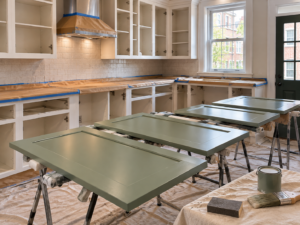
- Spraying (HVLP or airless with a fine-finish tip) produces the smoothest, most factory-like surface. It requires masking, a clean space for doors and drawer fronts, and careful control of overspray. Benjamin Moore’s guide generally recommends an HVLP gun for the smoothest finish.
- Brushing and rolling with a quality nylon-polyester brush and a fine roller is slower but simpler for cabinet boxes in an occupied kitchen. Self-leveling enamels minimize brush marks when the coat is applied evenly and tipped off with the grain.
Many professional jobs combine both: doors and drawer fronts sprayed off-site or in a controlled area, boxes brushed and rolled in place.
How Philadelphia Weather Affects Your Timeline
Cure times on data sheets assume moderate temperatures and humidity. Real kitchens vary:
- Cold rooms. Sherwin-Williams specifies applying Emerald Urethane above 50°F, and Benjamin Moore’s guide advises avoiding low temperatures. Kitchens on exterior walls in older rowhomes can run cooler in winter, and doors drying in a basement may sit well below room temperature.
- Humid summers. High humidity slows drying and curing. Benjamin Moore’s guide recommends ventilation and fans to keep air moving.
- Heavy coats. Thick coats take longer to dry and cure. Two thin, even coats outperform one heavy one.
Plan your schedule around these conditions. Rushing a coat in a cold, damp room is one of the most common causes of soft finishes and sticking doors.
Returning Cabinets to Service
A realistic sequence for a painted kitchen:
1. Let the final coat dry fully before rehanging doors, handling them by the edges.
2. Use bumpers on doors and drawer fronts to reduce contact with face frames.
3. Avoid heavy cleaning, scrubbing or harsh cleaners for the cure period listed by the manufacturer.
4. Load heavy dishes and pots gradually.
5. Keep the kitchen ventilated, especially in humid weather.
A Note on Older Homes and Lead Paint
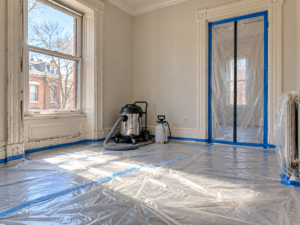
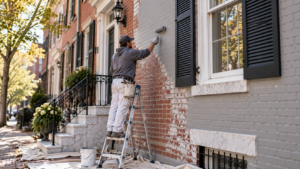
Many Philadelphia homes were built before 1978, and older cabinets, especially original built-ins, may have layers of lead-based paint. Sanding or scraping those surfaces can create hazardous dust. Under the EPA Renovation, Repair and Painting Program, firms performing work that disturbs paint in pre-1978 homes must be certified and follow lead-safe work practices.
Frequently Asked Questions
How long before I can use my painted kitchen cabinets?
Light use is often possible once the paint is fully dry, but full hardness takes longer. Benjamin Moore, for example, says its waterborne alkyd cures in approximately five days under good conditions, compared with weeks for many latex acrylics. Always follow the data sheet for the product used.
Why are my painted cabinet doors sticking?
Usually the paint has not cured, it was applied too thickly, or it is a softer product prone to blocking. Bumpers and extra cure time help.
Do I have to sand if I use a bonding primer?
Cabinet manufacturers’ and paint companies’ guidance generally still calls for cleaning and scuff sanding. A bonding primer improves adhesion but does not replace removing grease and gloss.
Is oil-based or waterborne paint better for cabinets?
Both can work. Waterborne alkyds offer water cleanup with a hard finish, while traditional oil enamels tend to yellow over time. The best choice depends on the color, the substrate and how the kitchen is used.
Can cabinets be painted in winter?
Yes, as long as the room and surfaces stay above the manufacturer’s minimum application temperature and there is enough ventilation. Expect slower drying in cold or damp conditions.
If you are thinking about painting your kitchen cabinets, our team can review the surface, recommend a primer and enamel system, and plan a schedule that allows proper cure time. Learn more about our painting services in Philadelphia and request an estimate.