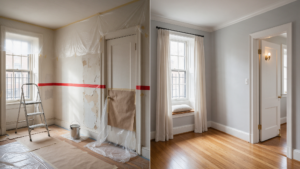

Peeling exterior paint is often treated as a coating problem when the real issue is water. Scraping and repainting damp wood, leaking trim, or a repeatedly wet surface creates a short-lived finish.
The Visible Symptom Is Only the Starting Point
Manayunk and Germantown exteriors may include wood cornices, porch trim, masonry, siding, windows, and older coatings exposed to sun, rain, and freeze-thaw cycles.
Why Location and Housing Stock Matter
Look above the peeling area for gutter overflow, open roof-edge details, failed caulk, end-grain exposure, soft wood, and moisture trapped behind capping. Also determine whether the paint is losing adhesion to a glossy or dirty previous coating.
What the Contractor Should Inspect
Remove loose material back to a sound edge using appropriate controls, repair damaged substrate and joints, clean, sand or degloss as appropriate, and prime bare or problem areas before finish coats.
Build the Scope Around Long-Term Service
Exterior paint protects best when applied to a stable, dry substrate. The coating system cannot compensate for active leakage or decayed material underneath.
Frequently Asked Questions
Can peeling paint be repainted without removing all of it?
Loose or failing material should be removed back to a sound edge; exact preparation depends on the substrate and existing coating.
Why does paint peel again in the same spot?
Recurring moisture, poor adhesion, incompatible coatings, or unresolved substrate damage can cause repeat failure.
Should exterior wood be dry before painting?
The substrate should be in a suitable moisture condition for the coating system; painting damp material can reduce adhesion and durability.
Plan the Next Step
Philadelphia Painting Services can evaluate peeling exterior surfaces, coordinate necessary prep and minor repairs, and apply the coating only after the substrate is ready.
Helpful source: U.S. EPA – Renovation, Repair and Painting Program