
Interior House Painting Costs in Philadelphia: A Practical Estimating FrameworkWhen planning to refresh a newly purchased property or update a tired living room, one of the first questions Philadelphia homeowners ask is, “How much is this going to cost?”It is a frustrating reality that generic online calculators—which often simply multiply the square footage of your floor by a flat dollar amount—are wildly inaccurate for urban properties. Philadelphia housing stock is diverse and complex.
Painting a newly built, empty drywall condo in Northern Liberties requires a fraction of the time and skill needed to restore and paint a 120-year-old Victorian parlor in West Philly with cracking horsehair plaster, 11-foot ceilings, and ornate dentil molding.At Philadelphia Painting Services, we believe in pricing transparency. While we cannot provide an exact quote without seeing your specific property, we can explain the exact variables professional painting contractors use to calculate labor, materials, and overhead.
Philadelphia Painting Services — official website.
EPA: Lead-Safe Renovation, Repair and Painting.
Here is the framework for understanding interior painting costs in Philadelphia.Variable 1: The Condition of the Substrate (Wall Prep)Professional painters know that 75% of a high-quality paint job is the preparation; the actual application of the paint is just the final 25%. The condition of your walls dictates the labor cost more than any other factor.New Drywall (Level 4 or 5 Finish): If your walls are newly hung, taped, and smoothly sanded, preparation is minimal.
The painter simply needs to wipe away dust, apply a high-quality drywall primer to seal the porous joint compound, and apply two topcoats. This is the least expensive scenario.Aged Plaster (The Philadelphia Standard): Most historic row-homes feature wood lath and plaster walls. Plaster is incredibly durable but cracks as the house settles over a century. Digging out hairline cracks, securing delaminated plaster with specialized washers, applying fiberglass mesh tape, and skimming the wall flat with joint compound takes days of meticulous labor.
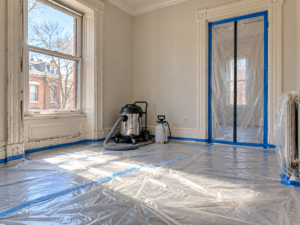
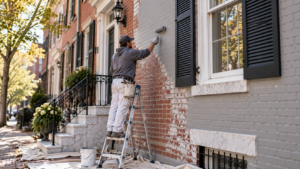
If your walls require extensive skim-coating, the cost of the project will easily double compared to painting pristine drywall.Lead Paint Mitigation: If your home was built before 1978 and your current trim or walls are peeling, the existing paint likely contains lead. Scraping and sanding this paint legally requires EPA RRP (Renovation, Repair, and Painting) Lead-Safe Work Practices. Establishing heavy plastic containment zones, utilizing HEPA-filtered vacuums, and performing specialized cleanup procedures adds significant time, liability, and cost to the estimate.
Variable 2: Architectural ComplexityThe physical layout and architectural details of the room directly impact the speed at which a painter can work.Ceiling Height: A standard 8-foot ceiling can be painted by a technician standing on the floor using an extension pole. Many historic Philadelphia homes, however, boast 10-foot to 12-foot ceilings. Working off step ladders or setting up interior scaffolding drastically slows down the production rate.
Furthermore, high ceilings mean taller walls, increasing the total square footage of the surface area.Trim and Millwork: Painting a room with basic 3-inch baseboards and flat hollow-core doors is fast. Painting a room featuring 8-inch Victorian baseboards, picture rail molding, heavy crown molding, wainscoting, and multi-pane French doors is highly labor-intensive. Intricate trim requires slow, steady brushwork (cutting in) by highly skilled painters. Trim painting often accounts for a larger portion of the budget than the flat walls themselves.Stairwells: Painting the walls above a steep, winding rowhome staircase is a major logistical challenge.
It requires specialized articulating ladders, stair-jacks, and safety rigging, which increases the labor time and risk premium on the estimate.Variable 3: Logistics—Occupied vs. Empty HomesThe physical environment of the job site heavily influences efficiency.Empty Properties: If you are having your home painted before you move in—with no furniture, bare floors, and empty closets—the painters can work at maximum efficiency. They can utilize airless sprayers for trim and move quickly without navigating around your belongings.Occupied Properties: Painting a fully furnished, lived-in home requires significant logistical planning.
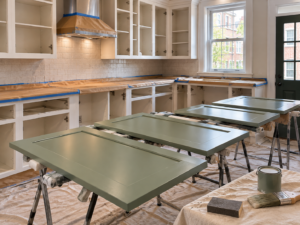
The crew must spend hours moving heavy furniture to the center of the room, wrapping it meticulously in fresh plastic, laying down heavy canvas drop cloths and Ram Board floor protection, and cleaning up their tools entirely at the end of each shift so your family can function in the evening. This mandatory site-protection and breakdown time is factored directly into the labor cost.Variable 4: Material Quality and Color ChangesPaint itself is only a fraction of the total project cost, but the quality of the materials and your color choices dictate the workflow.Premium vs.
Contractor-Grade Paint: High-end paints (such as Benjamin Moore Aura or Sherwin-Williams Emerald) cost significantly more per gallon than builder-grade lines. However, premium paints offer superior coverage, washability, and fade resistance. Investing an extra $30 per gallon in a high-traffic hallway will save you the cost of repainting the entire hall two years later when the cheap paint inevitably scuffs.Drastic Color Changes: If you are painting a light cream over an existing dark navy blue wall, a standard two-coat application will not provide full coverage. The dark color will “ghost” through the new paint.
This scenario requires applying a specialized high-hide primer coat first, followed by two topcoats. Adding an entire third coat of labor and material increases the overall cost. Conversely, applying a fresh coat of the exact same color often requires minimal priming and fewer coats.
FAQs About Interior Painting EstimatesShould the estimate include the cost of the paint
?Yes. A professional, itemized estimate should include all labor, sundries (tape, plastic, caulk, spackle), and the actual cost of the paint itself. The contract should clearly state the exact brand, product line, and finish (e.g., eggshell, semi-gloss) that will be used on your project.Do painters charge by the hour or by the project?Reputable painting companies almost always charge a fixed project rate based on their internal calculations of the estimated labor hours required.
Hourly rates are generally reserved for open-ended “Time and Materials” exploratory work, like stripping multiple layers of lead paint from a historic staircase.Is it cheaper to paint my ceiling the same color as the walls?Technically, yes. Using the same color on the walls and ceiling eliminates the need for the painter to slowly and meticulously “cut in” a perfectly straight separation line where the wall meets the ceiling.
However, using wall colors on a ceiling can make a room feel noticeably smaller and darker, which is why bright, flat ceiling white remains the standard.Understanding the technical drivers behind an estimate ensures you are comparing apples to apples when hiring a contractor. For a transparent, detailed, and professional interior painting assessment in Philadelphia, contact Philadelphia Painting Services.