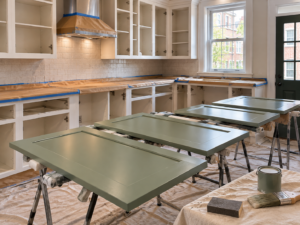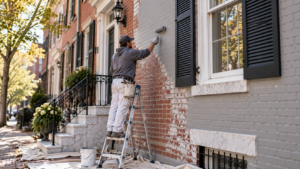

Achieving a smooth, furniture-grade finish on interior wood trim—baseboards, door casings, crown molding, chair rails, and window sills—is the hallmark of a high-end interior painting project. Across historic Victorian homes in West Philadelphia, classical brownstones in Rittenhouse Square, and modern rowhomes in South Philadelphia, decorative trim defines architectural character. However, applying premium latex or enamel topcoats directly over aged, dirty, or glossy trim leads to peeling paint, visible brush strokes, and hairline cracks along wall joints within months.
Professional interior painting durability relies 80% on systematic surface preparation and 20% on topcoat application. Understanding proper sanding, caulking, and bonding primer protocols ensures flawless paint adhesion.
1. Step-by-Step Interior Trim Preparation Protocol
- Degreasing and Cleaning: Baseboards and door casings accumulate household dust, shoe scuffs, and finger oils. Clean all woodwork thoroughly using a mild TSP (trisodium phosphate) substitute solution to eliminate wax and grease that prevent paint bonding.
- Scuff Sanding and Gloss Abrasion: Smooth, glossy enamel finishes—especially older oil-based paints—must be lightly abraded using 120-grit to 220-grit sandpaper or sanding sponges. Scuff sanding creates micro-grooves (a mechanical key) that allow new primers to grip the substrate.
- Nail Hole and Dent Filling: Fill recessed nail heads, wood gouges, and joint imperfections using high-solid interior wood filler or spackle. Once dry, sand flush with surrounding wood profiles.
- Precision Joint Caulking: Apply a continuous bead of flexible, paintable acrylic latex caulk along all wall-to-trim seams and molding miters. Smooth caulk beads with a damp sponge to eliminate gaps that create dark shadow lines after painting.
2. Selecting the Right Primer: Oil, Hybrid, and Shellac Formulations
Applying topcoat paint directly over bare wood or old oil-based coatings is a recipe for paint failure. Applying acrylic latex directly over legacy oil enamel causes topcoat peeling. Utilize specialized primers based on wood condition:
Primer Selection Guide:
- High-Adhesion Bonding Primers: Essential when transitioning from legacy oil-based enamels to modern waterborne acrylic topcoats.
- Shellac-Based Primers (e.g., BIN): Ideal for sealing pine knots, sap bleed, water stains, or severe smoke odors prior to painting.
- Oil-Based Wood Primers: Preferred for raw exterior-facing window sills and bare hardwoods to prevent grain raise.
3. Lead-Safe Work Practices in Pre-1978 Philadelphia Homes
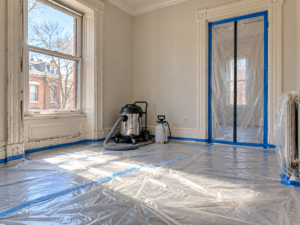
Residential properties built prior to 1978 frequently contain underlying layers of lead-based paint. Dry sanding or scraping pre-1978 woodwork releases toxic lead dust into indoor living areas. Professional painters must adhere to the EPA Lead Renovation, Repair, and Painting (RRP) guidelines, utilizing HEPA-shrouded sanders, plastic containment sheeting, and specialized wet-cleaning methods.
Thorough preparation transforms old, worn woodwork into crisp architectural highlights that endure daily household wear. Explore our professional interior painting services to arrange a detailed project evaluation with Philadelphia Painting Services.