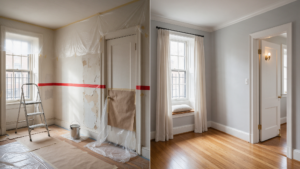

The visible problem is only the starting point when planning brick fireplace painting Philadelphia. In Queen Village, successful work depends on understanding the existing assembly, the desired result, and the details that connect the two. Interior brick absorbs differently than drywall and can hold soot, dust, efflorescence, and previous sealers that interfere with uniform paint adhesion.
Start With the Existing Condition
Cleaning should match the contamination and allow the masonry to dry fully before primer is selected; sealing damp masonry under paint can create future blistering or staining. Before pricing or demolition is finalized, document dimensions, access, adjacent conditions, and any signs that the existing work has already been altered. That gives the contractor a reliable baseline and helps separate a focused repair from a scope that needs broader correction. In older Philadelphia-area and South Jersey properties, this step is especially important because previous work may not match current products, drawings, or assumptions.
Plan the Work Before Finishes
Mortar joints and brick faces may need different levels of patching depending on whether the goal is a crisp painted finish or preservation of some original texture. Small conflicts become expensive when one trade covers another trade’s work or when a finish is fabricated before rough dimensions are verified. The project plan should therefore identify who owns each transition, what must remain accessible, and which decisions depend on field measurements. Material selections should follow those constraints rather than forcing the building to fit a product that was chosen too early.
Build the Scope Around the Real Condition
Areas that are exposed to significant heat need product selection appropriate for that location, and the firebox itself should not be treated like ordinary room masonry without verifying coating suitability. Durability comes from solving the cause, building the layers in the correct order, and leaving the finished system maintainable. Homeowners in Queen Village should be cautious of a cosmetic fix when movement, moisture, structural weakness, or service access suggests a deeper condition. The right scope may be localized, but that decision should follow inspection rather than guesswork.
What This Means for Local Property Owners
For someone comparing options for brick fireplace painting Philadelphia, the useful question is not simply which product looks best. The stronger question is which scope fits the actual property, protects the surrounding work, and can be serviced later without unnecessary demolition. Related searches such as paint interior brick fireplace Philly and masonry primer fireplace Philadelphia often point to the same need: accurate diagnosis first, then a coordinated plan that matches the building and the intended use.
Frequently Asked Questions
Can any interior paint be used on a brick fireplace?
The coating should be compatible with masonry and the expected temperature at the specific surface being painted.
Do soot stains need to be removed before priming?
Yes. Contamination can bleed through or interfere with adhesion if it is not properly cleaned and sealed.
Can painted brick be returned to natural brick later?
Removing paint from porous masonry can be difficult and may not restore the original appearance perfectly, so the decision should be considered carefully.
Plan the Next Step
If you are planning brick fireplace painting Philadelphia in Queen Village, Philadelphia Painting Services can help evaluate the existing conditions, define a practical scope, and coordinate the work around long-term performance. Learn more about Interior Painting at https://philadelphiapaintingservices.com/service2/ and schedule a project consultation before materials, demolition, or finish selections are finalized.
Helpful homeowner resource: U.S. EPA – Renovation, Repair and Painting Program