
A drywall patch can be perfectly smooth and still show through the final paint as a dull or shiny rectangle. The difference comes from surface porosity, primer coverage, roller texture, and sheen, not necessarily from poor color matching. For homeowners in Center City, South Philadelphia, Fish-town, and Manayunk, this is the kind of detail that can decide whether a renovation or repair remains durable after the visible finish is complete.
The primary search intent behind paint flashing drywall patches is practical: understand what the condition means, what should be checked before work proceeds, and how to avoid closing the assembly before the real cause is understood. The goal is not to over-complicate the project; it is to make the scope match the condition that is actually present.
Why This Detail Matters
The visible symptom is only one part of the decision. A contractor also needs to understand whether joint compound is fully dry and sanded to the surrounding texture, porosity difference between bare compound and previously painted wall, and how those findings affect the surrounding work. Resolving those questions before finish work protects the new materials and helps keep a localized detail from turning into avoidable rework later.
What a Professional Checks
A professional review typically includes:
- Whether joint compound is fully dry and sanded to the surrounding texture
- Porosity difference between bare compound and previously painted wall
- Primer coverage beyond the exact patch edge
- Existing paint sheen and how long the original coating has aged
How the Work Is Planned
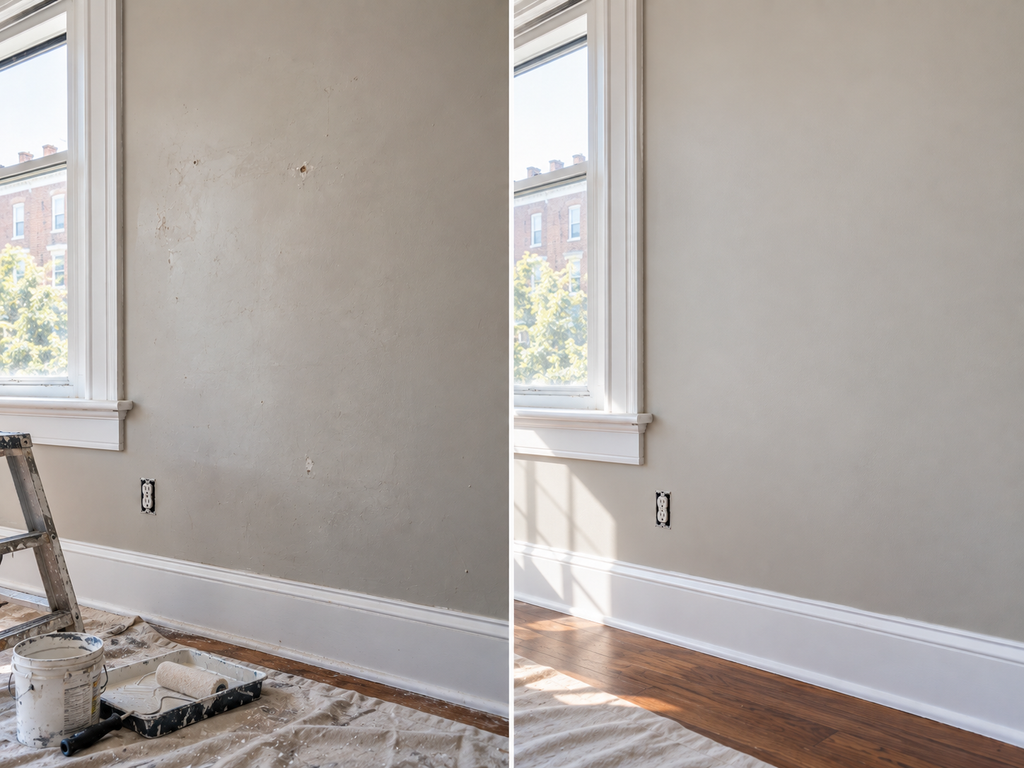
Spot priming should create a uniform sealed surface, and the finish coat may need to extend over the full wall from break to break when sheen is unforgiving. Matching roller nap and application technique also helps keep the repaired area from catching light differently. The best result comes from coordinating the hidden construction with the finish requirements so one trade is not forced to undo another trade’s completed work.
This is where a focused commercial service page should receive the strongest internal support. Learn more about painting services and how the broader project can be coordinated around the condition described here.
Common Failure Points
Painting directly over joint compound often produces a visible flash even when the color is exact. Repeated small touch-ups can build texture and sheen differences that become more noticeable with each attempt. A strong scope separates a cosmetic correction from work that affects performance, access, drainage, structure, or serviceability.
When the Scope May Need to Expand
If the wall has widespread patches, strong side lighting, or an older finish with unknown sheen, a full-wall repaint is often more predictable than isolated touch-up work. That decision should be made before the area is covered, painted, tiled, sided, or otherwise treated as complete.
Reference: U.S. EPA Lead Program. Requirements and field conditions vary by project, so the applicable authority and project-specific professionals should guide final decisions.
Plan the Next Step
Philadelphia Painting Services can help determine the prep, primer, coating, and application sequence needed for a durable finish rather than treating every surface as a simple repaint.