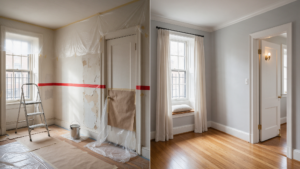

Transforming the interior of your Fishtown or Northern Liberties home with fresh color is an exciting endeavor. However, the prospect of having a construction crew working inside your fully furnished, occupied property can be daunting. Homeowners frequently worry about accidental spills, scratches on expensive original hardwood floors, and damage to their furniture. A professional painting company understands that their primary job is not just applying paint, but meticulously protecting your home and your belongings throughout the entire process.
The Preparation Phase: Securing the Room
Professional painters spend a significant portion of the project timeline on preparation before opening a single can of paint. Safeguarding an occupied home requires a rigorous, systematic approach to containment.
Moving and Protecting Furniture
In the narrow footprint of a Philadelphia rowhome, space is tight. If furniture cannot be temporarily relocated to another room or floor, it is carefully clustered in the absolute center of the room being painted. This provides the painters with clear, unobstructed access to the walls and ceiling perimeters. Once clustered, the furniture is draped entirely in lightweight, tear-resistant plastic sheeting. This creates an impenetrable barrier against airborne paint mist, sanding dust, and accidental splatters.
Hardwood Floor and Carpet Protection
The floors represent the largest vulnerable surface in any room. Simple canvas drop cloths are insufficient for high-end hardwood or delicate carpeting. While a canvas cloth absorbs a minor drip, a large spill will soak right through it and stain the wood beneath.
To provide maximum protection, professionals use heavy-duty rosin paper or specialized, self-adhesive floor protection films. These materials are rolled out and taped securely to the baseboards, covering every square inch of the flooring. According to guidelines by the Painting Contractors Association (PCA), utilizing slip-resistant, impermeable floor protection is an industry standard requirement for operating safely within occupied residential spaces.
Controlling Dust and Debris
Painting is surprisingly dusty work. Repairing drywall, sanding old trim, and smoothing out spackle creates a fine, powdery dust that can easily travel through your HVAC system and coat the rest of your house.
Containment and Ventilation
To isolate the workspace, painters install thick plastic zip-door barriers over the entryways of the room being painted. They also temporarily seal off the supply and return air vents in that specific room so dust is not sucked into the home’s ductwork. When intensive sanding is required, professionals utilize HEPA-filtered vacuum attachments connected directly to their orbital sanders, capturing 99% of the dust at the source before it ever goes airborne.
A Seamless, Stress-Free Experience
You should not have to spend days cleaning your house or repairing scratched floors after a painting crew leaves. By hiring a company that prioritizes site protection as highly as the paint application itself, you guarantee a pristine result with zero collateral damage. For meticulous, respectful service, rely on our team for trusted interior painting in Philadelphia. Contact Philadelphia Painting Services to schedule a seamless interior update for your occupied home today.
FAQs:
- Do I need to move all my furniture out of the house before painters arrive? No. While small, fragile items and electronics should be removed by the homeowner, professionals will handle moving large furniture to the center of the room and covering it securely with plastic.
- How do painters protect my kitchen cabinets if they are just painting the walls? Cabinets, countertops, and appliances are masked off with specialized painter’s tape and draped in lightweight plastic sheeting to ensure zero overspray or drips touch the surfaces.
- Will the paint fumes be dangerous for my family and pets? We utilize premium Low-VOC (Volatile Organic Compound) or Zero-VOC paints for interior residential projects. These modern formulas emit almost no odor and are completely safe for occupied spaces.