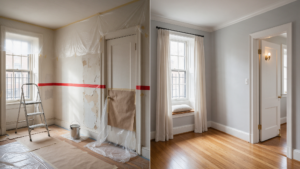

Life is tough on your home’s interior walls. Moving heavy furniture, swinging doors, plumbing leaks, and the natural settling of older Philadelphia rowhomes all take a toll on drywall and plaster. While slapping some spackle into a nail hole is a DIY project, repairing large holes, water-damaged ceilings, or extensive stress cracks requires professional skill to ensure the patch remains invisible under a fresh coat of paint.
Executing flawless drywall repair in Philadelphia involves more than just filling a gap—it requires structural backing, precise mudding, and accurate texture matching.
Fixing Doorknob Holes and Impact Damage
When a doorknob punches through the drywall, filling it with caulk or expanding foam is a recipe for a terrible finish. Professional repair requires cutting out the damaged section into a clean square.
For larger holes, contractors install wooden backing strips (furring strips) behind the wall. A new piece of drywall is screwed securely to this backing, creating a rigid patch that will not flex or crack when leaned against in the future. The seams are then taped with fiberglass mesh and coated with multiple layers of joint compound.
Addressing Water Damage and Stains
Plumbing leaks from an upstairs bathroom can ruin a living room ceiling in minutes. Drywall acts like a sponge; once it gets wet, it loses its structural integrity and becomes a breeding ground for mold.
Water-damaged drywall must be completely cut out and removed. Attempting to dry it out and paint over it will result in bubbling and recurring brown water stains. Professionals remove the compromised material, ensure the framing behind is completely dry, install new drywall board, and use a specialized stain-blocking primer (such as a shellac-based primer) over the entire area before the final topcoat is applied.
The Art of Skim Coating and Feathering
The secret to an invisible repair is in the finishing. A novice will leave a distinct, raised bump over the patch. Professionals use wide taping knives (10 to 12 inches) to “feather” the joint compound outward, blending the edges so gradually into the surrounding wall that the transition is undetectable to the eye or touch.
For walls that have suffered extensive cosmetic damage from removing old wallpaper, a “skim coat”—a very thin layer of joint compound applied over the entire wall—is the best way to create a brand-new, glass-smooth surface ready for premium paint.
CTA
Don’t let damaged walls ruin your interior aesthetic. Contact Philadelphia Painting Services for professional drywall repair that leaves your walls perfectly smooth and ready for paint.