
What Causes Paint Flashing on Interior Drywall? is a practical planning question for property owners in Philadelphia. The right approach depends on the existing conditions, the way the space or system is used, and how the proposed work interacts with surrounding materials. Understanding those details early helps prevent a cosmetic decision from creating a larger construction, maintenance, or code problem later. That review should happen before demolition, fabrication, or installation begins.
What Paint Flashing Looks Like
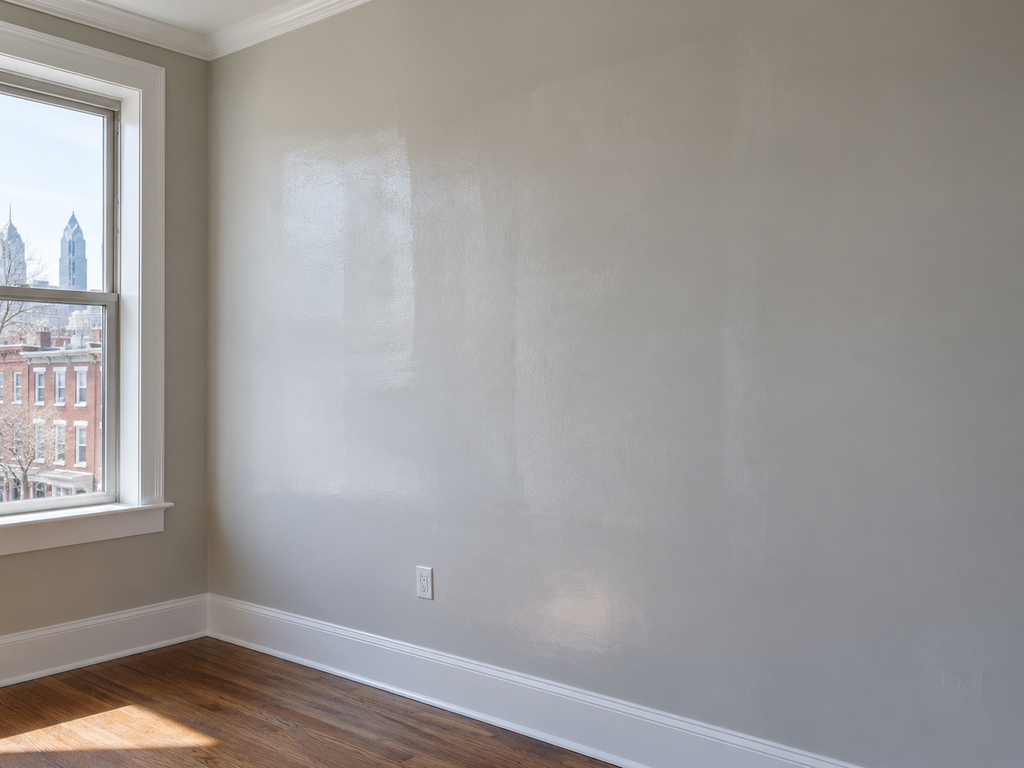
Flashing appears as uneven sheen, dull patches, or shiny areas that become obvious in side light. The color may be correct while reflectivity changes across repairs, overlaps, or porous spots. It is especially noticeable on long walls, dark colors, higher sheens, and surfaces illuminated by windows or wall-washing fixtures.
Uneven Porosity Is a Frequent Cause
Joint compound, patched drywall, bare paper, stains, and old paint absorb a new coating differently. Spot priming may still leave a visible halo if the surrounding surface varies. A suitable primer and a full finish coat from corner to corner can help create uniform absorption and sheen.
Application Technique Also Matters
Dry rolling, inconsistent film thickness, stopping in the middle of a wall, or rolling back into partially set paint can leave visible lap marks. Maintaining a wet edge, using the recommended roller cover, mixing containers consistently, and controlling room conditions improve uniformity. More coats will not help if the same application problem continues.
Diagnose Before Repainting
Allow the coating to dry fully and examine the wall under normal lighting before deciding on correction. Identify whether the issue is surface preparation, primer, sheen selection, touch-up technique, or lighting. Sand or repair defects as needed, then repaint to natural breaks using a consistent system.
Questions to Resolve Before Work Begins
Before authorizing a repair, document when the symptom appears, what changed before it started, and which areas or fixtures are affected. Ask the contractor to separate observation from diagnosis, explain what testing or selective opening is needed, and identify the condition that would change the proposed solution. The written scope should state what is included, how adjacent finishes will be protected, how concealed damage will be handled, and what will be tested before the repair is considered complete. Request photographs of concealed conditions and completed work where access will later be closed. Keep model numbers, material information, test results, permits, and care instructions with the property records so a future service provider can understand what was repaired and how the finished system is intended to perform.
Planning the Next Step
Property owners should compare the visible condition with the broader assembly, confirm any permit or manufacturer requirements that apply, and document the proposed scope before materials are ordered. Guidance from American Coatings Association can help frame the technical questions, while an on-site evaluation determines what is appropriate for the individual property. Contact Philadelphia Painting Services to discuss surface preparation, coating selection, scheduling, and finish expectations for your residential or commercial painting project.
Learn more about interior painting services.